
I did not discover miso until just last year, when the pandemic cooking doldrums spurred me to look beyond my usual repertoire. Several of my cookbooks had recipes that featured the fermented paste, so I ordered some online and started to use it. Miso is one of those ingredients where you wonder how you cooked without it before. If you are just dipping your toes into the waters of this ingredient, head over to Good Food (Aus) for a primer on all things miso.
First, the basics: miso is a foundation of Japanese cuisine and culture. Miso combines cooked soybeans with a grain - usually rice but sometimes barley, rye or buckwheat - and is then fermented with specific varieties of a fungus: usually Aspergillus oryzae (also used to make saké and shoyu) or Aspergillus sojae. There are three main types of miso, white, yellow and red. The white is milder while the red has a stronger flavor because it is fermented longer. White is the most common and can be found in most supermarkets, red is also abundant but less so than white, but for yellow miso you may need to head online or to a specialty shop. The flavor of miso is salty and sweet and somewhat nutty.
It might be easier to list foods where you wouldn't want to use a little miso than to spell out everything where its flavor boost is welcome. You can use it on roasted vegetables, meat, or fish; in soups and stews; and even in desserts. Browse the 2,700+ miso recipes available online in the EYB Library, or try one of these Member favorite recipes that highlight the advantages of using miso:
- Miso sweet potato and broccoli bowl (with miso-sesame dressing) from Smitten Kitchen by Deb Perelman
- Miso butter onions from Ottolenghi Flavour/Flavor by Yotam Ottolenghi and Ixta Belfrage and Tara Wigley
- Sweet miso-glazed aubergine (Nasu dengaku) from JapanEasy by Tim Anderson
- Roasted autumn vegetables with walnut-miso sauce from From the Oven to the Table by Diana Henry
- Miso-gochujang pulled pork from Christopher Kimball's Milk Street Magazine
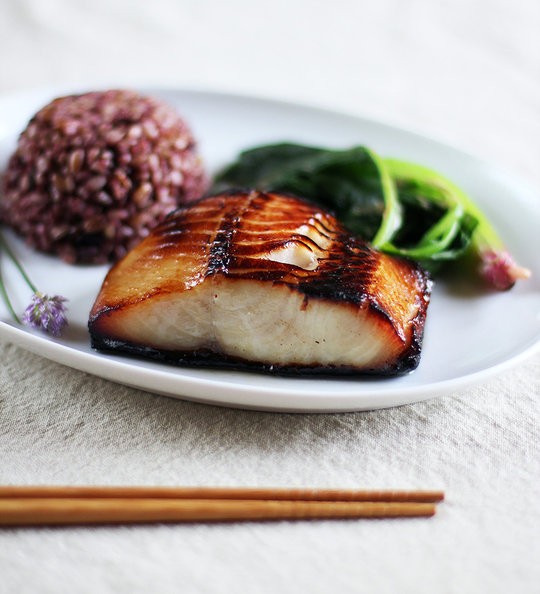
- Nobu's miso-marinated black cod from The Kitchn (pictured)
5 comments
hillsboroks
mjes
I know that the miso portion is available as a standalone book but I must recommend https://www.eatyourbooks.com/library/51158/the-book-of-tofu-
Rinshin
FuzzyChef
ccav