
I’m not sure how I missed this website before, but this week I found The Sifter, which describes itself as a “tool for food history research.” The Sifter is a database that contains information about thousands of historical cookbooks (including hundreds of community cookbooks), Medieval French and German recipes, and food-related manuscripts in multiple languages. The database is public, and free to use, and like Wikipedia, offers users the ability to populate the database with additional information.
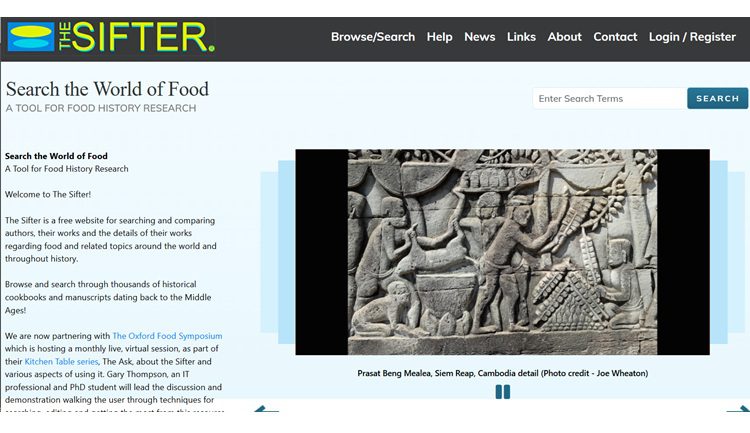
The Sifter encourages users to register for the site, which provides the opportunity to add and correct entries. In the future, the site hopes to provide data visualizations, links to digitized photographs, artworks, television and film. At the current time, it includes over 8,000 authors and almost as many works, with the details about the authors and the contents of their works. Like Eat Your Books/CookShelf, it does not contain the text of books or the recipes themselves, but provides details about them, such as tables of contents, recipe titles, and some details about the recipes like ingredients or equipment. There are links to images or PDFs of some publications.
According to the site’s FAQ section, “The central documents are cookbooks and other writings related to getting, preparing, and consuming food, and the activities associated with them, as well as writing about cultural and moral attitudes.” The Sifter is currently partnering with the Oxford Food Symposium, hosting a monthly virtual session to help people navigate the site. The session is free, but you must register for it.
1 comment
Zephyrness