
Just when you think frozen yogurt is a thing of the past, a new generation comes along and makes it popular again. The 1980s saw the first wave of frozen yogurt dominance before waning at the end of the decade. About 10 years later, however, it bounced back, peaking in the early aughts before once again declining in popularity. Now frozen yogurt is back in the spotlight again, with several factors boosting the comeback.
Registered dietician Scott Keatley explains the reasons for froyo's renaissance: “It’s part nostalgia for the ’90s–2000s self-serve froyo era, and part renewed interest in gut health and fermented foods,” he says. Frozen yogurt enjoys a reputation of being healthier than ice cream due to it having active cultures to promote gut health, and having less fat than ice cream. However, some of the health benefits may be overstated. Freezing reduces the amount live cultures and some brands use yogurt powder instead of having any active cultures.
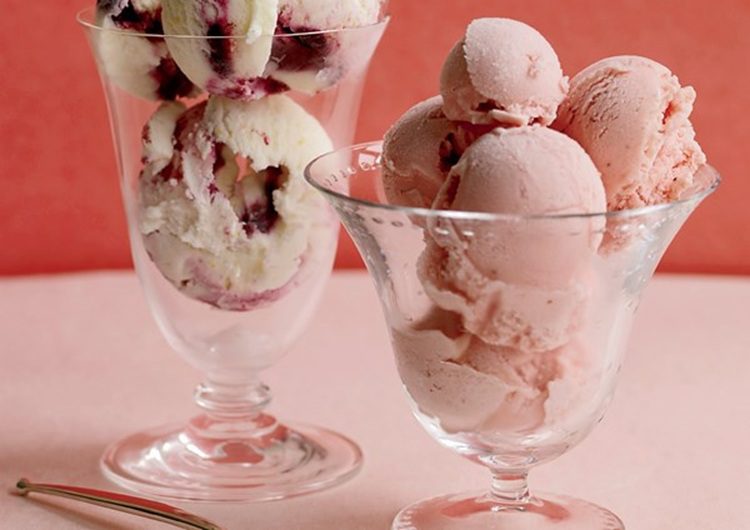
What really kills the health benefits are the toppings that are commonly served with froyo: things like sprinkles, chocolate chips, and candy. Adding a bunch of toppings increases the calorie count significantly. Some brands have a higher sugar content than others, so you have to be careful which ones you choose. Of course, you can always make your own so you can control the sugar content and choose your favorite flavors. One option is the Lemon-blueberry frozen yogurt [Jeni Britton Bauer] from Desserts by Food and Wine pictured above. Some of the ice cream cookbooks I reviewed included frozen yogurt recipes, including Jeni's Splendid Ice Creams at Home, The Perfect Scoop, and Hello, My Name Is Ice Cream.