
It's one of life's biggest ironies: the time to preserve fruits and vegetables is during the hottest, stickiest days of the year. Sarit Packer and Itamar Srulovich recently wrote that this is their busiest time of year for canning and preserving as some of the fruits most suited to canning are in season right now: figs, grapes, and plums. In a similar vein, Anna Berrill recently answered a reader's question about how to best preserve summer fruit and vegetables. Berrill consulted an expert, Rachel de Thample, author of Fermentation (River Cottage Handbook No.18), who explained different methods of preservation beyond canning.
While putting up food may once have been about creating enough food to survive the winter, now it's more about having something that reminds us of summer during cold, dark and dreary days—those days when we pine for the hot, sticky summer weather (well maybe not the sticky part). Not only does preserving allow us to savor summer's bounty throughout the year, but it can also feel comforting and provoke nostalgic feelings about the past. Plus there's something almost magical about being able to make food safely last well beyond its normal shelf life, no spell or wand needed: just basic food safety knowledge, jars, and lids (plus a fair amount of sweating). Judging from the number of preserving books on Member Bookshelves, I'm not alone in my love of this old-fashioned exercise.
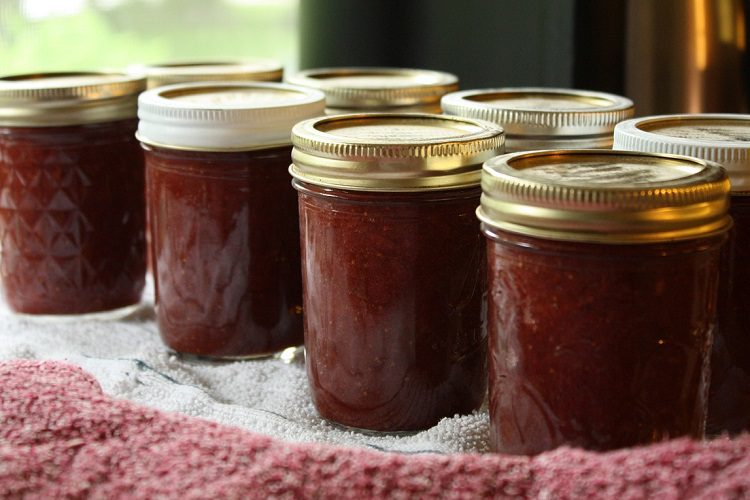
There are hundreds of books on this subject ranging from rigorously scientific, like René Redzepi and David Zilber's The Noma Guide to Fermentation: Foundations of Flavor, to those that prioritize flavor over technique, like Mes Confitures: The Jams and Jellies of Christine Ferber. I own both books and while I appreciate the knowledge imparted in the former, I most often use the latter for inspiration during canning season. You don't have to sweat over a hot stove and water bath to preserve food, as many preserving books focus on cold fermentation, which requires even less equipment and almost no sweat. The tradeoff is that it's a little more exacting. I can still remember the time a large crock of sauerkraut in our basement went bad, probably because a contaminant was lurking on the surface of the food, utensils, or on the crock itself. My parents argued about who would have to take the crock outside because no one wanted to go near it due to the foul odor it emitted.
Failures like that make the successes all the more sweet. Once I cured my own pancetta, hanging the meat in the only place that was both the correct temperature and where my cats couldn't get at it: in the middle of the basement rec room ceiling. It was amusing to watch the cats pace around underneath the pancetta trying to find a way to reach it, and ever so satisfying to pull it down weeks later and realize that I had made something delicious using little more than salt and time. These days I mainly make fruit jams and pickles, both to preserve the garden's bounty and to have small gifts for the holidays. This year's berry harvest was disappointing so there were fewer jars, making each one more valuable. What's your favorite way to preserve the season?
2 comments
Ganga108
averythingcooks
My freezers fill up with herb concoctions (ie pestos & chopped blends) and other ready to use ingredients (roasted peppers & oven dried tomatoes are 2 biggies) to reach for all winter. Single servings of soups are also popular freezer finds.
AND I am currently having lots of fun with my new copy of Freeze Fresh Meal Preps...making different "starters" that are now waiting to be finished into garden bounty meals.
As a side note, I have some friends who have said "too bad you have so many gardens because you could travel in the summer like us". My response? "Too bad you travel so much because you could have gardens like mine" :)