
Home gardeners in the north are finally starting to savor the literal fruits of their labors, and one of the most cherished items in backyard gardens is the tomato. The globes gradually turn from green to red (or occasionally yellow and orange), and when the tomato is perfectly ripe, you can pluck it from plant and rush it inside to be sliced and devoured. Only it rarely works that way. The blushing pink tomato of yesterday might be split open today, or maybe the squirrels or birds decided to take a bite out of the luscious fruit. 'But it won't taste as good if you pick it early', you might think. However, ripening on the counter works just as well as vine ripening.
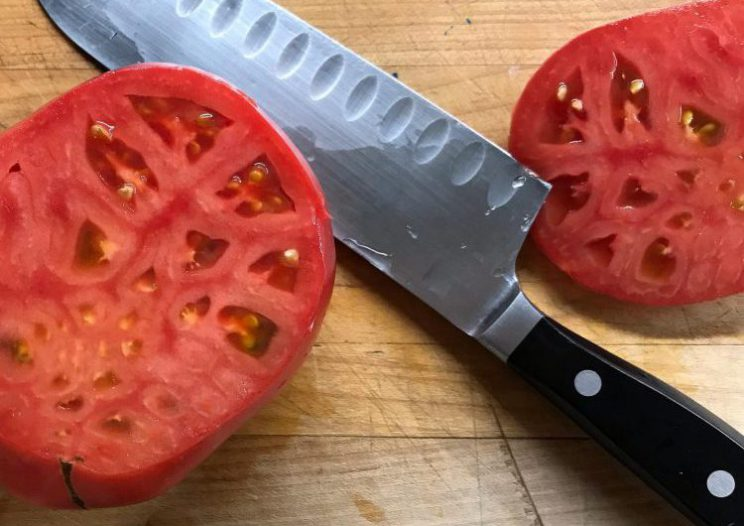
The key is picking the fruit after the tomato starts to take on a bit of color, known as the "breaker stage". Once the tomato reaches this point, the plant dramatically slows down the amount of nutrient it sends to the fruit. The ripening occurs without much, if any, input from the plant. Further supporting this theory, a study found that tasters could not tell the difference between vine- and counter-ripened tomatoes. If you wonder why the tomatoes still on the vine at the supermarket taste better than their vine-less counterparts, it's because they are picked at the "breaker stage" while the others are picked fully green.
The advantages to picking a tomato before it is fully ripe are that you can avoid the scenarios listed above and you can more easily control the ripening temperature and you could get more nutrients out of it. Tomatoes do not produce as much lycopene and carotenoids once temperatures reach 86 degrees Fahrenheit. (The way the weather has been here, I will be surprised if my tomatoes had any nutrients left.) It's nice to know that I do not have to camp out near the tomato plants waiting for the perfect moment; picking it with some color and letting fully ripen on the counter will work just as well.
2 comments
Rinshin
Pamsy