
Revere Ware, Pyrex, All Clad, Chicago Cutlery, Lenox—storied US brand names in the kitchenware space. Perhaps it is more accurate to say they were storied brand names. Industry consolidation has led to some of these brands disappearing altogether (RIP, Revere Ware), and private equity firms have gobbled up dozens of others, leading to a downward spiral of plant closures, offshore manufacturing, and diminished quality. How did we get here? Keyana Sapp explains how six companies came to own 81 brands of cookware and kitchen tools, and why these items got worse, on purpose.
One private equity firm, Centre Lane Partners, has swooped in to "rescue" struggling companies, most recently Instant Pot, and it has acquired ten other brands: Pyrex, Corelle, CorningWare, Snapware, Visions, Chicago Cutlery, Anchor Hocking, Lenox, Oneida, and Reed & Barton. French conglomerate Groupe SEB now controls the rights to T-fal, All-Clad, Lagostina, de Buyer, and Emeril. Meyer, a manufacturing company operating out of Vallejo and Thailand, makes cookware with familiar names including KitchenAid, Rachael Ray, Circulon, and Analon. You may remember Groupe SEB and Meyer from earlier this year, when we reported that they sued direct-to-consumer cookware company Caraway, saying that Caraway's advertising claims were impugning their reputation. (Sapp does not have good things to say about Caraway, either.)
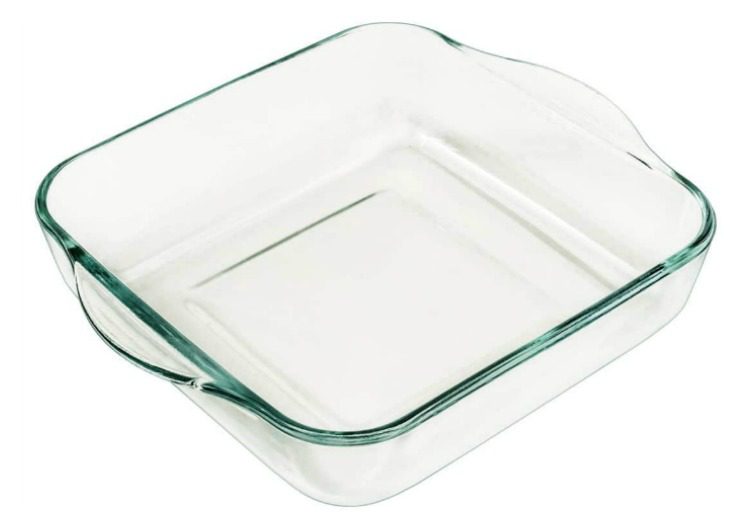
In theory there is no inherent problem with one company acquiring another, but in practice, what usually happens in private equity acquisitions is that production gets moved overseas and the purchasing companies squeeze the goodwill of the brand name until nothing is left but a hollow husk. Sapp explains how Corning, which developed Pyrex in 1915, sold its consumer business in 1998, after which the Pyrex brand bounced around from failing company to failing company, ultimately ending up in the hands of Centre Lane in 2024. (The details of the entire sordid affair, which includes multiple bankruptcies and claims of fraud, is both fascinating and infuriating.)
Centre Lane immediately folded Corning into another of its subsidiaries, Anchor Hocking, which shortly thereafter announced that the Pennsylvania factory that had produced Pyrex since 1893 would close, and operations would consolidate in its Ohio plant. However, a former Pyrex engineer claims that the Ohio plant can't produce enough Pyrex, so production has since been moved overseas. 300 people lost their jobs when the Pennsylvania plant closed. (A few years ago we wrote about problems with newer Pyrex shattering, likely due to a shift from borosilicate glass to soda-lime glass, which is less resilient to thermal shock. This change predated the Centre Lane acquisition by decades, so they are off the hook for that issue.)
Even when the production remains at the same factory, a new owner can mean the cookware becomes cheaper and flimsier as the company chases maximum profit. This has apparently happened with All-Clad, which is still made in America but is now owned by Groupe SEB. All-Clad's multi-layered cookware was the among the best in the world, but after Groupe SEB's acquisition in 2004, something appears to have changed. The company's pans were labeled as dishwasher safe, but starting in the mid-2010s, people began to notice that the bonded rims would corrode, ultimately leaving a sharp edge that could easily cut through skin. A class action lawsuit was ultimately settled and people who purchased D3, D5, or LTD pans between 2015 and 2022 received compensation. What didn't happen is restoring the pans to their previous quality. Instead, All-Clad just removed the "dishwasher-safe" label and now recommends hand washing only.
The article also has sharp words for some (but not all) of the new, direct-to-consumer cookware brands developed via venture capital funding. Sapp says that they start off in the devalued position of overseas manufacturing and poor quality, relying on slick advertising and dubious health claims to drive sales. Sapp notes one exception in the DTC market: Made In cookware, which didn't start with venture capital and is still run by its founders. Its products are made in France, Italy, and the US. He also recommends a number of brands still producing quality products in the US and Europe, including those many of us love such as Le Creuset, Staub, Lodge, Smithey, Field Company, Victorinox, Wüsthof, de Buyer (although watch out since Group SEB recently acquired it), Matfer Bourgeat, Nordic Ware, and USA Pan.
Surprisingly to me, Sapp still recommends All-Clad—just don't put the new stuff in the dishwasher. He also mentions a few companies I wasn't familiar with such as Lancaster Cast Iron, Borough Furnace, Stargazer, Heritage Steel, and Dexter-Russell. One brand not mentioned that I find worth noting: the Fiesta Tableware Company, which makes its products in Newell, West Virginia (not to be confused with Newell Brands, which is based in Atlanta). Fiesta has been owned by the same family since its creation in the 1930s.
13 comments
stahl_amy
rabyll
Rinshin
dbuhler
Kinhawaii
LeilaD
Jane
annmartina
Ctemescu
Darcie
SACarlson
dsbingham
Darcie