
We have reported before about how cookbooks continue to do well while much of the publishing market struggles with sluggish and even falling sales. The usual arguments for the success of this genre are that people prefer the tactile feel of books, it is easier to cook or bake from a printed page than from a screen, and that cookbooks are more aesthetically pleasing than online media. These are all true, but another important way that cookbooks provide value over online tools - one that is often overlooked - is that they are permanent.
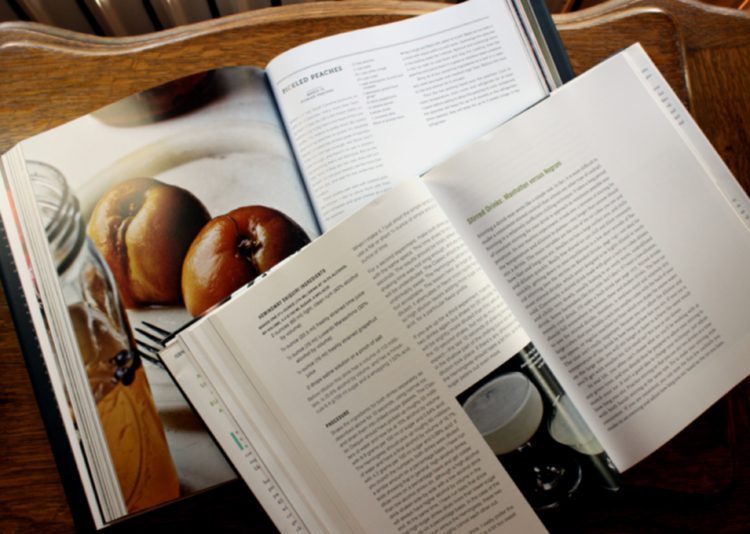
Major food websites have closed down on short notice, sometimes without providing users with a method to download the recipes that they have come to rely upon. Links get broken. Streaming services quietly pull programs and artists from their lineup with no warning. These problems simply do not exist with physical media. People have started buying DVDs, CDs and vinyl records again because they worry (rightly) that movies and albums will not be available online in perpetuity, not to mention the fact that the quality of music is usually much better on physical media.
I recently discovered that when our microwave is in use, it interferes with our wi-fi (we are working to mitigate this, but it is far down on the to-do list). This is frustrating if I am, for instance, defrosting something that takes several minutes and meanwhile I cannot access the recipe website I was using. I don't have to worry about my internet service being interrupted when I am cooking from a book. I don't even have to worry about power outages because I have a gas cooktop and a flashlight. A cookbook doesn't care if the electricity is on.
It's true that there are downsides to physical media. Fires and floods can damage or destroy a collection gathered over a lifetime. There are limits on how much room is available for cookbooks (or can be allocated to cookbooks without spousal revolt). However, I'm still betting that it is more likely for a website to disappear than for my house to burn down, so I will continue to buy books even though I use recipe websites (and of course use EYB to find the recipes, no matter where they are stored). I am also taking the precaution of downloading favorite recipes that are not available in a printed form (whether a print to PDF or even a screenshot), just in case.
All this to say: cookbooks will - and should - continue to be prized because of the many advantages they have over online resources. When you find a cookbook author that clicks with your palate and cooking style, it is wonderful to have a collection of those recipes readily at hand in one of their books. It's also a wonderful way to recognize and support such authors. Long live the cookbook!
14 comments
Indio32
Also with regards digital books no one seems to talk about the down sides of not being able to lend them to a friend, give them/buy them from a charity shop and constantly being fearful that the service will close and take them all with it.... look at the excellent work Louis Rossmman is doing on YouTube about content providers changing terms of service after they have your money.
FJT
They've saved my bacon a few times ... the not so funny 15 months when the US govt decided to stop processing foreign visas so I couldn't get mine renewed and was stranded abroad in a variety of rental kitchens, or the time when I had to fly back to the U.K. for 6 weeks to care for my In-Laws after one of them had major surgery.
If I was limited to buying physical cookbooks I would have a much reduced collection; I tend to get them as gifts, but I no longer buy them for myself.
KatieK1
averythingcooks
bwhip
Over the past few years, I've definitely made a big shift toward Kindle books on my iPad. A big reason for that is the bargain prices available on so many titles. Thanks to EYB for regularly updating us on those! When I can get a $40 cookbook for $2.00, and have it with me wherever I am, it really helps for meal planning and grocery lists. I can always take a screen shot and print the recipe out for cooking, if for some reason I'd rather do that than pull it off the screen.
tmjellicoe
MFJ196
eliza
I have several strategies for my physical books: I take cookbooks out of the library and often don’t end up buying them. Also I buy my physical books second hand whenever possible. Cost is much less, and you’re using a book that might otherwise have been landfill. More second hand purveyors (for example World of Books in the UK) are also now paying royalties to authors on second hand books they sell. Most of my second hand purchases have appeared brand new.
JimCampbell
I am definitely in the old-school camp. I like sitting in my chair in the evening with a glass of wine reading a cookbook. I like the tactile feel of a book. I find myself to drifting from the cookbook I am reading to looking across the room at the stacks, contemplating similar cookbooks I may wish to revisit. It's not unusual to see a half dozen cookbooks next to the chair, and even a wine stain or two.
I do agree the amount of cookbooks amassed, 1,540 and counting, does come at the expense of space. The spouse has been extremely patient with this addiction. I am slowing down.
I buy most cookbooks at thrift shops, and at the local 'Friends of the Library' bookshops where the proceeds go back into the library. I do still get caught up occasionally in a food review here on EYB and end up on Amazon.
demomcook
KarenGlad
racheljmorgan
gamulholland
boncie