
When I moved to the South as a fresh-faced college graduate, I spent Thanksgiving far away from my upper-Midwest family. Luckily, a friend welcomed me into their family, inviting me to share in their Thanksgiving feast. That was where I first encountered sweet potato casserole topped with mini-marshmallows. Since I have an eternal sweet tooth, I happily ate it but I've always wondered how this came to be a side dish instead of a dessert, and why marshmallows were considered the perfect topping. I don't have to wonder any longer, as Southern Living provides the history of this classic Southern dish.
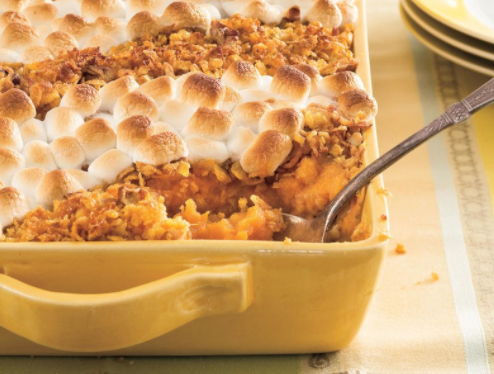
To understand this recipe you must first trace the history of marshmallows. Before humans invented the sweet, puffy, white substance we know today, they used the sticky sap of the marsh mallow plant (althaea officinalis), which had been prized for its medicinal properties for centuries, if not millennia. The first recipes using the sap concentrated on lozenges or syrups before morphing into a marsh-mallow paste and eventually the fluffy concoction along the way. Much like Coca-cola, the original ingredient that inspired the name of the product disappeared from its ingredient list.
While the pairing of sugar and potatoes had been going on for over a hundred years, the placement of marshmallows on sweet potatoes is just over one hundred years old. The practice dates to about 1916, and really took off after the Angelus Marshmallow Company included a recipe for sweet potatoes topped with marshmallows in a promotional leaflet. Although the dish is most popular in the South, you can find it on Thanksgiving tables across the US although where I'm from, the marshmallows are more likely to end up suspended in Jell-O. But that's another history lesson altogether.
4 comments
Jenny
Indio32
GloriaRS
ccav