
During the pandemic, almost everyone turned into a sourdough bread baker. That phenomenon lasted only until supply chains started to catch up and people weren't idled in their homes, and I expect a fair amount of sourdough starter has since been tossed. It's a shame, really, because most inexpensive supermarket breads are ultra-processed tasteless loaves while a good loaf of real sourdough can set you back a pretty penny. Is there any way to bridge the divide between affordable, unhealthy mass produced bread and artisanal loaves that aren't chock full of additives? A recent article in The Guardian tries to find that middle ground in the battle over bread.
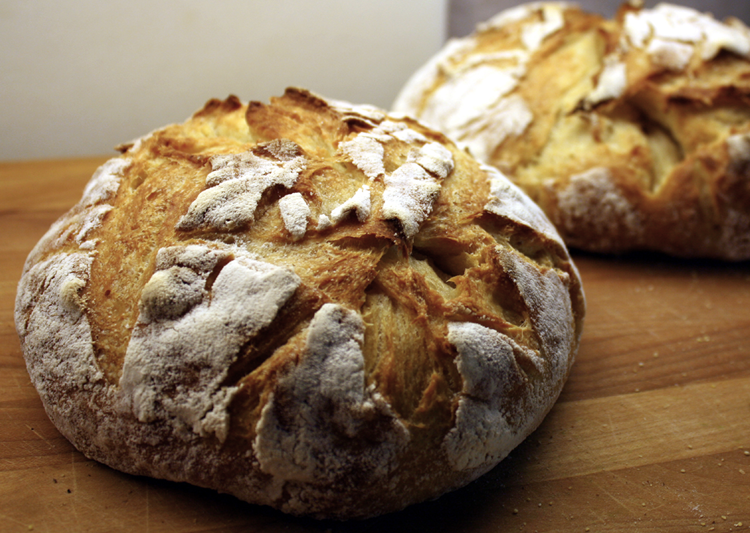
Tracing the rise of supermarket bread takes us back to the Roman era, when "the lord’s bread was snowy white and it was up to the rest of the household to ‘know the colour of their bread’ and therefore their place.” Having white bread was a status symbol so it's ingrained (sorry not sorry) in our collective psyches to value that bread over a heartier, wholegrain loaf. We are also creatures of habit, so if we were raised on squishy white bread, that's what we are going to seek out later in life. I do love a soft white loaf, even though I know the ingredient list is full of dough conditioners and preservatives.
The other issue is one of cost. The difference in price between a plain supermarket loaf and a handsome, handmade bread can be as high as a factor of ten. Families struggling to stay afloat during a time of high inflation are not going to choose the rustic sourdough if it costs five or ten times as much. But there is room in the middle, says Andrew Whitley, the co-founder of the Scotland the Bread project. If we focus on growing a smaller quantity of higher quality wheat we can bridge the gap. “If we can eat fewer slices of more satisfying bread, we take pressure off our belts, our food budgets and the natural world, where biodiversity loss from intensive grain farming is as big a crisis as climate breakdown,” he says.
6 comments
janecooksamiracle
Once every couple of months I order white cut bread from England. I get 2 loaves and freeze them using a couple of slices every now and then.
FINALLY a proper sandwich ?
Wende
Bittman Bread, however, is a much more relaxed experience than what I remember sourdough to be when I made it decades ago, and I far prefer it. I also prefer the emphasis on whole grain breads simply because they are much healthier.
Baking Bittman Bread can be tailored to fit most schedules, feeding the starter is much less of a pain, and the bread - I settled on a whole wheat seeded rye with my own combination of seeds - is not only the best bread I've ever made, but easily falls in with the best bread I've ever eaten. The magic of using flour, water, salt, seeds, and nothing else!
rmpostonmfandt
dbuhler
Summerlandsky
MonikaM