
When I was growing up I had the luxury of eating only farm fresh eggs because my grandmother raised chickens. Of course, when you're a child you do not recognize the luxuries you have; I wanted to get the pure white eggs from the supermarket that didn't have pieces of straw and dirt (and worse) on them. Now I would love to have those dirty eggs, from chickens that were allowed to roam around the farmyard eating bugs, table scraps, and premium chicken feed, guarded by a zealous German shepherd who kept the raccoons and foxes at bay.
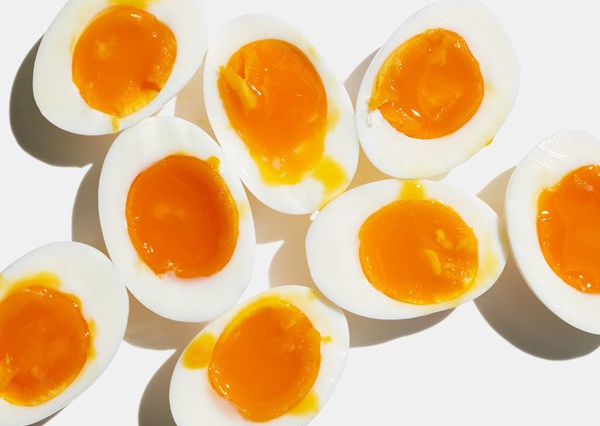
The hens' quality of life aside, the yolks from those truly free-range chickens possessed a deeper, richer color than the grocery store eggs. There was nowhere to post the color contrast back then, but now we have Instagram and TikTok, and one of the most common food videos today involves someone cutting into a runny egg with the vibrant orange yolk spilling out onto a plate or onto other food. The darker the yolk, the better the egg, these videos suggest. This is part of a trend toward fetishizing vibrantly colored yolks, says writer Marian Bull. In a piece called Orange is the New Yolk, she dives into the reasons people love a dayglo orange egg.
Vivid yolks were not always prized, says Bull, tracing the history of the egg's popularity among consumers. Fat phobia and misplaced cholesterol concerns gave eggs a black eye in the 70s and 80s. It wasn't until the 'farm to table' movement took off in the 90s that eggs began their climb back into the good graces of the public. "The rise of the farm egg on fine dining menus also coincided with the Great Recession," notes Bull. Looking to find luxe ingredients that didn't break the bank, chefs turned their attention to eggs. Suddenly they were everywhere, and the "jammy egg" became a ubiquitous menu item.
But where did the color obsession come from? According to Bull, "As consumers grow ever more alienated from the animals, crops, and laborers involved in producing the ingredients we buy, more and more producers have made an effort to remind us that they come from farms, creating a strange feedback loop of ignorance. We have been taught to equate color with better treatment and better nutrition, whether it’s true or not." Most blind studies have found little to no taste difference between a 'factory farm' egg and one from a small farm like my grandparents had. Nevertheless, people associate a deep orange color with quality eggs.
Today the color of the yolk does not necessarily indicate anything about the living conditions of the chicken who laid it, says Bull. Industrial-scale farms took note that consumers prefer a darker yolk and started feeding their chickens additives that boosts the yolks' color. The only way to know whether that rich, golden yolk is due to the hen living an idyllic life or turmeric in the feed is to buy eggs directly from a farm where you can see for yourself how the hens are raised and what they are eating.
8 comments
Indio32
Fyretigger
At 19/20 (we crossed birthdays), a college friend and I spent the second half of the summer between our 2nd and 3rd years of college bumming around Europe, doing the Youth Hostel thing. At one point, we were staying in a hostel in, I think it was Switzerland (Bern? Lucerne?) -- rooms of 3-4 bunk beds, with communal bathrooms and a common area with shared kitchen and dining facilities.
My friend and I are cooking our breakfast when we hear an "Ayeeeh!" We look up. A tall, slender, Hispanic man was staring down into a bowl. He looked up and saw us looking at him, and maybe saw we had eggs too. He came over to us and asked, "Are these eggs okay?" We looked at a couple of perfectly typical eggs in bowl. We responded with some version of "Yeah, why?" He said, "The yolks are yellow." I think my friend and I exchanged looks, "Yeah..." He responded, "They should be red!"
A fairly long conversation ensued. He was from someplace in South America, I want to say Argentina, but I really don't remember where. And where he was from, the typical egg yolks were nearly red. This was when in the US, egg yolks were a near universal medium yellow, and we had no clue they could be other colors. That conversation was an education.
averythingcooks
sayeater
cookbookaddict2020
sanfrannative
ania.s
JDAMORE