
My first exposure to induction cooking occurred way back in 1995. The company I worked for at the time had previously ventured into selling appliances but rather quickly decided it was not a good fit for its business model. A few odds and ends remained on a clearance rack in one of the company's retail stores, and among those was a portable induction cooktop. I had never heard of induction cooking before, so when I noticed the appliance I was intrigued. I was able to purchase the cooktop for a song because it appeared obvious no one else was going to buy it.
I brought it home and was amazed by how quickly the device heated up the enameled cast iron pan I placed on it. Equally astonishing was how soon the cooking surface cooled after the pan was removed. I used the cooktop frequently over the next year or so, until it suddenly quit working. By then I was a fan of induction cooking, but there were no cooktops available for a reasonable price. My husband had also given me a set of copper cookware for my birthday, so I had less incentive to replace the broken appliance. I pretty much forgot about induction for 20 years.
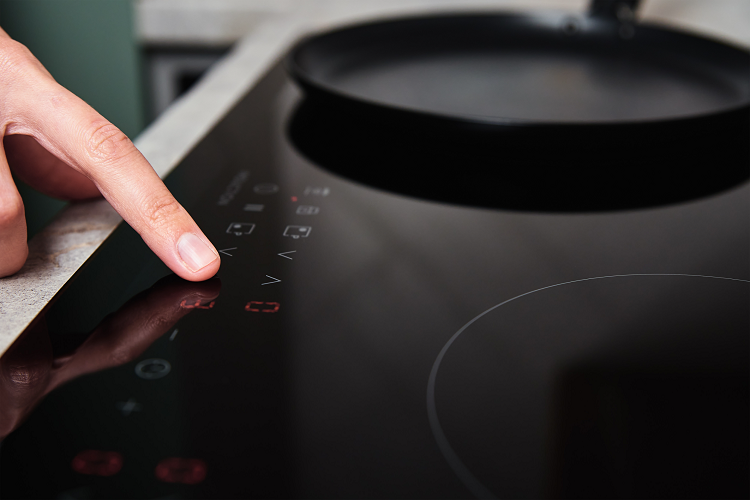
Now, of course, induction is extremely popular because it performs well and it is more environmentally friendly than gas or standard electric ranges. As people consider converting to induction they have many questions about making the switch. Good Food (Aus) recently asked three top chefs about induction cooking and put together an "Induction cooking 101" primer to answer some of those questions.
Chief among potential buyers' concerns is whether they will have to replace all of their pots and pans. Most people will need to get different nonstick pans, but they probably already have some compatible cookware. The easy way to tell if a pan will work with induction is to see if a magnet will stick to the pan. If it does, the pan is induction compatible; if it doesn't, the pan will need to be replaced.
The chefs also provide tips on how best to use an induction cooktop. There is a learning curve in what heat settings to use. Most cooktops today have a touchpad with plus and minus signs for the heat levels, which takes some getting used to (the one I used in the 1990s had a convenient slider to control the heat, showing that sometimes new design does not equal better design). According to the chefs, it is better to start with a low heat setting and gradually increase it. Since induction is so responsive you can easily ramp up the heat if needed.
There are other tips and tricks in the article to help you get the most out of induction cooking and to help you decide if switching to induction would be a good decision for you. My dream is to get a half-and-half gas/induction cooktop so I can use all of my cookware (if you know about such a hybrid model, let me know). If you've made the switch to induction and have any advice to offer, please share it in the comments!
11 comments
Fyretigger
I actually use my Duxtop as much or more at home, as I do on the road in the RV. Summertime cooking can be done using the induction cooktop and the RV solar/battery without heating the house. With the thermostatic control, it's the perfect buffet warmer -- it might not be as stylish as a can of Sterno beneath a chafing dish, but it has a thermostat and doesn't give off fumes. And making stock, with the thermostat is a dream, it's far preferable to my gas cooktop -- I feel safe with leaving it to run an errand, where I would never do that with gas or thermal coil electric.
My next cooktop will definitely be induction for the sake of the environment and my allergies (gas combustion byproducts).
If anyone wants to dabble, this Duxtop is the current equivalent to the one I've had such good luck with.
Also, it's worth mentioning, that it's possible to get a magnetic disk to sit atop the induction burner, that allows you to use any cookware with it. It essentially turns the induction burner into a standard electric burner. While this defeats the efficiency of induction, it does mean that you don't have to replace every single piece of your cookware -- like my Revere-ware double boiler I use about once a year.
FJT
Indio32
vickster
Jane
Rella
I am able to use many All-clad skillets/pans on the induction hobs. Skillets that don’t have a complete flat bottom; i.e., imprints/indents, won’t work.
I have a 4 qt. Red Staub w/black inside (not white ceramic) which works on either of the two hobs.
I don’t use the temperature control often because when the temperature falls below the temperature setting, it will heat to bring the temperature up to the setting too quickly and and liquid will sputter/splatter.
Pamyoungvb
Suitsme
Mamarita
One thing not mentioned is that you should check the amp rating. Induction will pull more amps than regular electric. For the range we were told 40 amps, but an electrician friend suggested 50 amps especially if you run the cooktop along with the ovens. Another thing to check if you have a full cooktop is checking to see if the top has a bridge that ‘joins’ two burners/hobs. This will allow you to use a griddle as the bridge heats the entire griddle.
RTS48
Cast iron works a treat but do test your cookware before buying if at all possible, Our first, really smart looking, ceramic lined saucepans really were very weakly ferromagnetic and just will not work on some of the larger 'burners'. We were very lucky to discover a 10 piece set of German saucepans specifically designed for induction. One characteristic of these saucepans is that hey boast a 'no flame' wall.
Getting back to my induction hob (made by TEKA of Italy), it does not have temperature control but each burner has 10 setting levels from 'warm' to full on. Indeed I am suspicious that an induction hob can measure temperature accurately as the hob itself is only heated by conduction from the cookware sitting above it. What the hob does have is the ability to combine two 'burners' so that they can be used for a griddle (mine is cast iron).
As others have stated, with the low temperature of the hob surface and the fact that it is flat glass / ceramic, cleaning is so wonderfully easy. Add to that the increased efficiency compared with hot coil, infra red and gas , the fact that every burner has a settable timer and that response is instant enough to catch boil overs. I would never be without my induction cooktop.
JanElsner