
Salt is the most important and ubiquitous seasoning on the planet. It's played a vital role in human food since humans started cooking, appearing in the most ancient recipes known to man. While salt is a basic component of most recipes, many myths have developed around this pantry staple. The Washington Post's Becky Krystal decided to debunk seven of the most common misconceptions about salt.
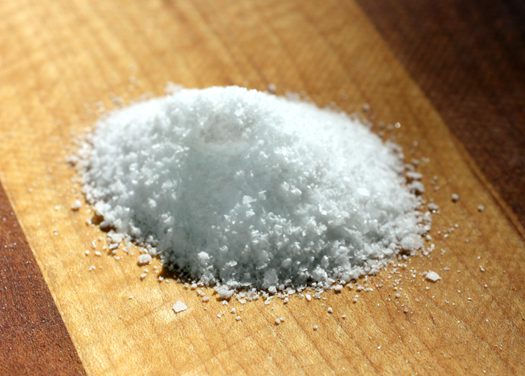
Myth #2 dovetails nicely with a recent thread on our Member Forum regarding the differences between kosher salt and sea salt. This myth centers around the idea that every type of salt is interchangeable. As we know, the size of salt crystals varies so volume measurements can result in a dish being woefully over-salted if, for instance, you substitute equal teaspoon measures of table salt for Diamond Crystal kosher salt.
The fourth misconception is one that is close to my heart: the notion that you don't need to use salt when baking. Pish-posh. As Samin Nosrat says, “The foundational ingredients of sweets are some of the blandest in the kitchen. Just as you’d never leave flour, butter, eggs, or cream unseasoned in a savory dish, so should you never leave them unseasoned in a dessert.”
The final myth could start arguments among some cooks, that fancy salts will make your food taste better. I've read many a recipe in which the author states without hesitation that a particular kind of salt will impart a specific flavor in a dish, even when it's used in preparing the dish rather than as a finishing garnish. I've always been skeptical of those claims because once you add other herbs, spices, and ingredients into the pot, any subtle nuances from the small amount of salt used will be lost.
To underscore the importance of salt to cooking (and therefore to our Members), I will note that we've written about salt on the EYB blog many times:
- Salt of the earth (and sea)
- Is it okay to use salted butter in baking?
- James Beard on the importance of salt
- The case of the disappearing salt shaker
- Hand harvesting of salt makes a comeback in France
- Salting essentials
- The intriguing work of salt shepherds
- When is the best time to add salt?
- Do you really need Kosher salt?
- Confused about salt?
4 comments
KatieK1
ThePatheticBaker
One more reason why using weight measures are better.
ellabee
Rella
I really like this information on salting WHILE cooking
https://www.youtube.com/watch?v=zKEwA__rOHk&t=26s