
How many cookbooks do you have that are written in another language? How many others that began life in another language but were translated to English? If you have a large enough cookbook collection, you might have a handful of books that aren't in your native tongue, but most of us only have cookbooks in one language, and for most readers of this site, that language is English. The fact that so few cookbooks are translated means we are missing out on a tremendous amount of food knowledge and culture, says food writer Alicia Kennedy. She asks an important question: "If we’re going to spend so much time talking about how food unites the world, wouldn’t it be sensible to make translation a part of that exchange?"
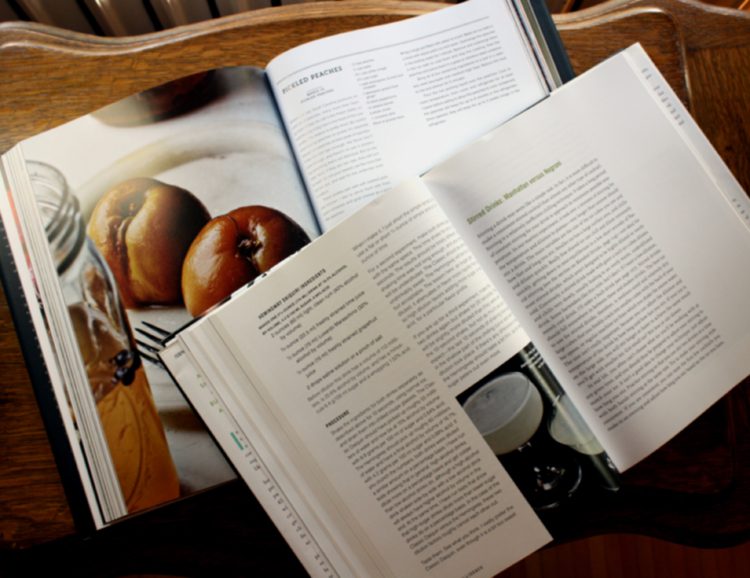
Kennedy notes that translating cookbooks could clear up a lot of misconceptions or ignorance about ingredients. Consider the recent NY Times article on durian, and how differently that subject would be treated if written about by someone from a culture that has an intimate relationship with the fruit. Having cookbooks from a cuisine written by someone who is fluent in the language of the area also opens up so many possibilities we don't have now due to language constraints. Very few magazines or books in general are translated into English - less than 3% overall - and fewer still of cookbooks and cooking magazines.
While Kennedy does find a few bright spots such as Whetstone magazine, the bilingual English-Spanish publication Huellas, Goya Journal in India, and an upcoming bilingual newsletter/zine from Buenos Aires–based food writer Kevin Vaughn called Matambre, she sees vast room for improvement. Kennedy notes that there are plenty of translators available for work and scores of writers who would love to have a larger audience, and wonders "how much more accurately would the culinary world be depicted if we let people speak in the language that allows them to say what they want, not just what they can?"
8 comments
monique.potel
In my collection I would say there is about 600 in English 400 in French 5 in italien 3 in Spanish I would love to find some of the italien Spanish or even all of the other méditerranéen countries translated
It would give us a real insight and understanding on local cooking which today we only experience through the interest or curiosity of somebody else and their selection or interpretation
I am all for find translations
Lmastriaco
JFM
It covers the basics, without photos. What I have recently observed with the making of pastry: in this book are two basic pastry recipes for flans, tarts, pies, etc. One has a different ratio of fat to flour. But they work every time!
I have also tried many pastry recipes from new English and American books and they haven't always worked...although labeled "foolproof".
Another cultural difference: to peel vegetables we use a "Sparschäler" (see picture here: https://de.manufactum.com/set-schweizer-sparschaeler-a99578/), and we also use it to peel ginger. In every English or American book that I've read, it says to scrape it off with a teaspoon.....;=))
Agaillard
RaySadler
Certainly they increase one's vocabulary, as well as widening the scope of one's cooking.
Not strictly a foreign language - American (?) - one soon learns arugula=rocket, rutabaga=swede etc, but we could do with an Anglo-American dictionary of cookery terms - cuts of meat, for example are a minefield - odd items like half-and-half, cream of wheat, gelatinized flour, saltines, Graham crackers, all unknown this side of the pond, and doubtless many in the opposite direction.
Jenny
Marsaluna
Italian cuisine is highly regional, with provinces, cities and sometimes even parts of cities having their own distinctive cuisine. For instance there are age-old Greek and Albanian communities in Calabria that still make their traditional foods. Sicilian food is a real mixture—it has Greek, Arab, Norman and Spanish elements reflecting people who have conquered and/or settled there.
Also, Italians are interested in food in a serious way—there are academic societies that aim to document and preserve regional cuisines. This information just isn’t available in English.
I’m of Italian descent and I’ve taken Italian lessons here and there but am by no means fluent. But cookbook vocabulary is limited and it’s relatively easy to figure out— carote, olio d’oliva, polenta, sale e pepe —well, you get the idea, and you can google the rest.
I do wish I could get my Italian cookbooks into EatYourBooks. Typing them all in would be a good distracting pandemic project.
miznic
I completely agree on the need to fully understand the origins of the recipes and ingredients in question. That's part of the reason I try to get older cookbooks - I want to understand the time and place, and the reason for the steps in the recipe and the choice of ingredients. I can't do that unless I can translate what I'm reading.