
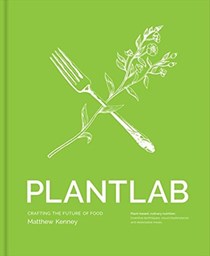
Plantlab: Crafting the Future of Food by Matthew Kenney is a visual feast for the eyes. Kenney, long considered a pioneer in raw and vegan cuisine, delivers the definitive vegan cookbook for serious foodies and chefs. His life's work has been his commitment to plant-based innovation as well as culinary nutrition, and here he employs inventive techniques and creative thinking in dishes that are visual masterpieces as well as delectable meals.
As founder of Plantlab® a high end vegan culinary
school created to meet the increasing demand for
health-conscious cuisine by offering world-class, plant-based
culinary training and Matthew Kenney Cuisine, an
integrated, California-based lifestyle company, Kenney states that
his role is to share the benefits of what his companies do, and to
ensure that future generations treat food and food preparation with
respect, in order to best serve the world's citizens, its animals,
and the planet.
Plantlab, the cookbook, begins with an
introduction that details the author's work as mentioned above, his
thoughts on the future of food and the role creativity plays in his
food. Photo albums come next with each section divided by skill
level: Fundamental, Advanced, Professional and Future. Trailing the
stunning photography, recipe text is set forth with the same. The
index before each section outlines the recipe titles and
descriptions of dishes and sets forth both the recipe page number
and the page number where the photograph can be found in
parenthesis. The same goes for each photograph and recipe sharing
cross information which makes this very user friendly as it is not
your typical cookbook that has photos and recipes set out on the
same page. There is nothing typical about this book at all. It will
stretch our creativity and skill levels with the bonus of sparking
an interest in how we approach and think about food which is one of
the reasons it made my best books of 2017 list.
Like all masterpieces, work is involved. Creating dishes that are visually stunning, while incredibly delicious, isn't for the faint of heart - there is a required dedication in using the best quality ingredients as well as time to address each component and assembly of the finished dish. Plantlab is true inspiration as a resource to explore our creative side and hone our culinary skills.
Special thanks to Regan Arts for sharing the following recipe with our members today along with providing two copies of Plantlab in our contest below.
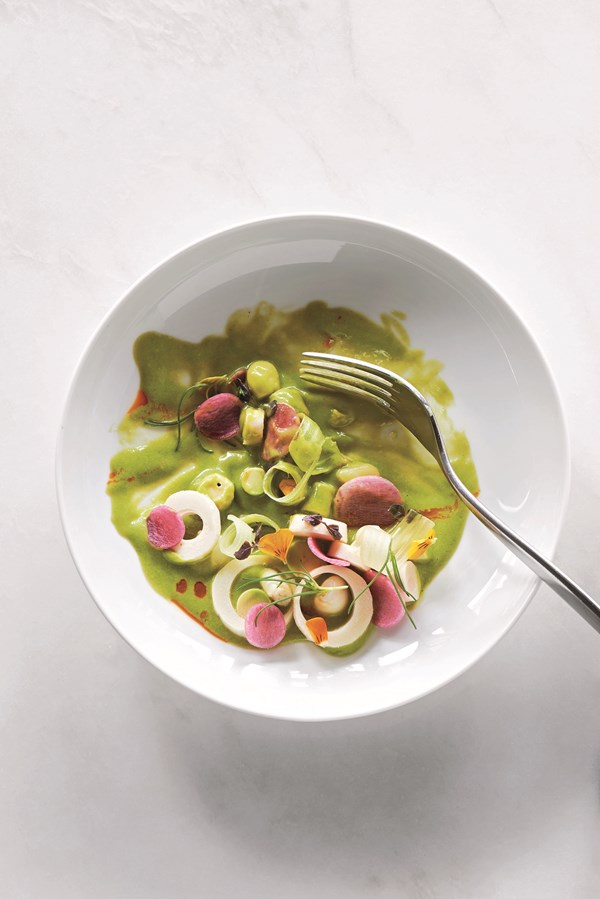 Hearts of palm ceviche, leche de
tigre, red pepper oil
Hearts of palm ceviche, leche de
tigre, red pepper oil
Add this recipe to your Bookshelf (click the blue +Bookshelf button).
Serves 6-8
Hearts of palm
- 1⁄4 cup lemon juice
- 2 tablespoons olive oil
- 1⁄2 teaspoon sea salt
- 1 pound hearts of palm, sliced into rounds
Whisk lemon juice, olive oil, and salt in a bowl. Add hearts of palm, making sure they are completely covered with dressing. Cover bowl and refrigerate for at least 30 minutes.
Leche de tigre
- 2 cups celery juice
- 1 bunch cilantro, chopped
- 1⁄2 habanero pepper, seeded
- 1 aji amarillo, whole
- 2 tablespoons ginger, peeled and minced
- 1 1/2 cups fresh lime juice
- 1 clove garlic, chopped
- 3 cups coconut milk
- 1 tablespoons sea salt
In a high-speed blender, blend the celery juice, cilantro, habanero, aji, ginger, lime juice, and garlic until smooth. Reduce speed to low, slowly add the coconut milk, and continue blending until emulsified. Add salt to taste and strain through a fine mesh strainer.
Red pepper oil
- 1⁄2 cup grapeseed oil
- 1⁄4 cup Sichuan chili flakes
- 1⁄2 teaspoon salt
Blend the oil, Sichuan chili flakes, and salt in a small blender at the highest speed for 3-5 minutes. Pour oil and chili mixture through a strainer with a coffee filter inside. Let the oil drain undisturbed; do not force it through. Store in a sealed container in the refrigerator.
Garnish
- 2 celery stalks, shaved with a vegetable peeler, stored in ice water
- 1 watermelon radish, sliced thin with a mandoline
- 1⁄2 cup micro or small Thai basil leaves
- 1⁄4 cup seagrass
- Edible flowers (nasturtium or Johnny Jump Ups)
Assembly
Place the marinated kale in a pile in the center of a shallow bowl. Place the cubed watermelon on the kale in a circle. Pour 1 tablespoon ponzu-lime marinade over the watermelon. Garnish the watermelon with ginger, mint, and flowers. Season with flake salt.
Excerpted with permission from Plantlab: Crafting the Future of Food by Matthew Kenney (Regan Arts, Nov. 2017) Photo: Adrian Mueller

The publisher is offering two copies of this book to EYB Members in the US. One of the entry options is to answer the following question in the comments section of this blog post.
Which recipe from the index would you try first?
Please note that you must be logged into the Rafflecopter contest before posting or your entry won't be counted. For more information on this process, please see our step-by-step help post. Be sure to check your spam filters to receive our email notifications. Prizes can take up to 6 weeks to arrive from the publishers. If you are not already a Member, you can join at no cost. The contest ends at midnight on March 12th, 2018.
52 comments
Dannausc
DimensionAEB
Siegal
choppergirl
Shelley.b
lebarron2001
JenJoLa
lgroom
AnnaZed
jr0717
sarahawker
EmilyR
Angryyew
littleminxgirl
FireRunner2379
jmay42066
ravensfan
LaurenE
kmn4
sgump
Megoola
clairew137
HomespunHouse
rachael_mc
maestra
I will dream about making Quinoa pudding, lucuma ice cream, chocolate sauce, chocolate tuile until I can get my hands on some lucuma pulp.
Sfgordon
MelMM
BrandonGM
Farro-fennel sausage pizza, cashew mozzarella, tomato sauce !
Hurrah for vegan pizza!
t.t
RickPearson54
Marcia1206
Scotsman61
Gussiecat
HermionieG
daniellespinato1
outsidereader
Aproporpoise
RecipesLost
ktpotat
Lucicat
AlisonL
TheCookbookCook
sequoia55
RSW
Jenamarie
NaomiH
Laura1
lauriesk
Coffeebean
Julia
KarenDel
orchidlady01