
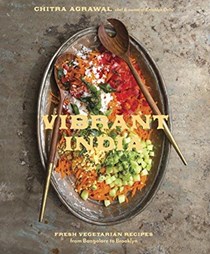
 Vibrant India: Fresh Vegetarian
Recipes from Bangalore to Brooklyn by Chitra Agrawal, the chef
and owner of Brooklyn Delhi, takes us on a culinary journey to her
mother's hometown of Bangalore and back to Brooklyn.
Vibrant India: Fresh Vegetarian
Recipes from Bangalore to Brooklyn by Chitra Agrawal, the chef
and owner of Brooklyn Delhi, takes us on a culinary journey to her
mother's hometown of Bangalore and back to Brooklyn.
In this gorgeous book, she adapts her family's South Indian
recipes for home cooks using satisfyingly rich, bold and complex
flavors. Grains, legumes, fresh produce, coconut, and yogurt -
along with herbs, citrus, chiles, and spice - form the foundation
of this cuisine, rooted in vegetarian customs. Vibrant India is a symphony of colors and
flavors and a sign to me that a higher being loves us and wants us
to be happy.
Every recipe in this title appeals to me and will be a fantastic
way to zhoosh up our meals to bring more exciting vegetarian
options to our table. As my eighty five year old neighbor would say
while as I was growing up "this book really blows up my skirt" (but
she was usually talking about a man). Potato Stir-fry with
Onion and Ginger and Green Bean and Coconut Stir-Fry I have made
already and I could totally go vegetarian with recipes like these!
Spiced Spring Vegetable and Coconut Polenta (which we are
sharing here for you today) and Lemon Peanut Rice are next up from
this book in my kitchen. I cannot wait until fresh corn is
readily available to make the Stir-fried Corn with Basil and Leeks
but this recipe looks so tempting I may make do with corn that has
some miles on it.
Our thanks to Ten Speed Press and the author for sharing this affirmation of Spring in a bowl with our members. Be sure to enter our contest for a chance to win one of three copies of this title for our members in the US.
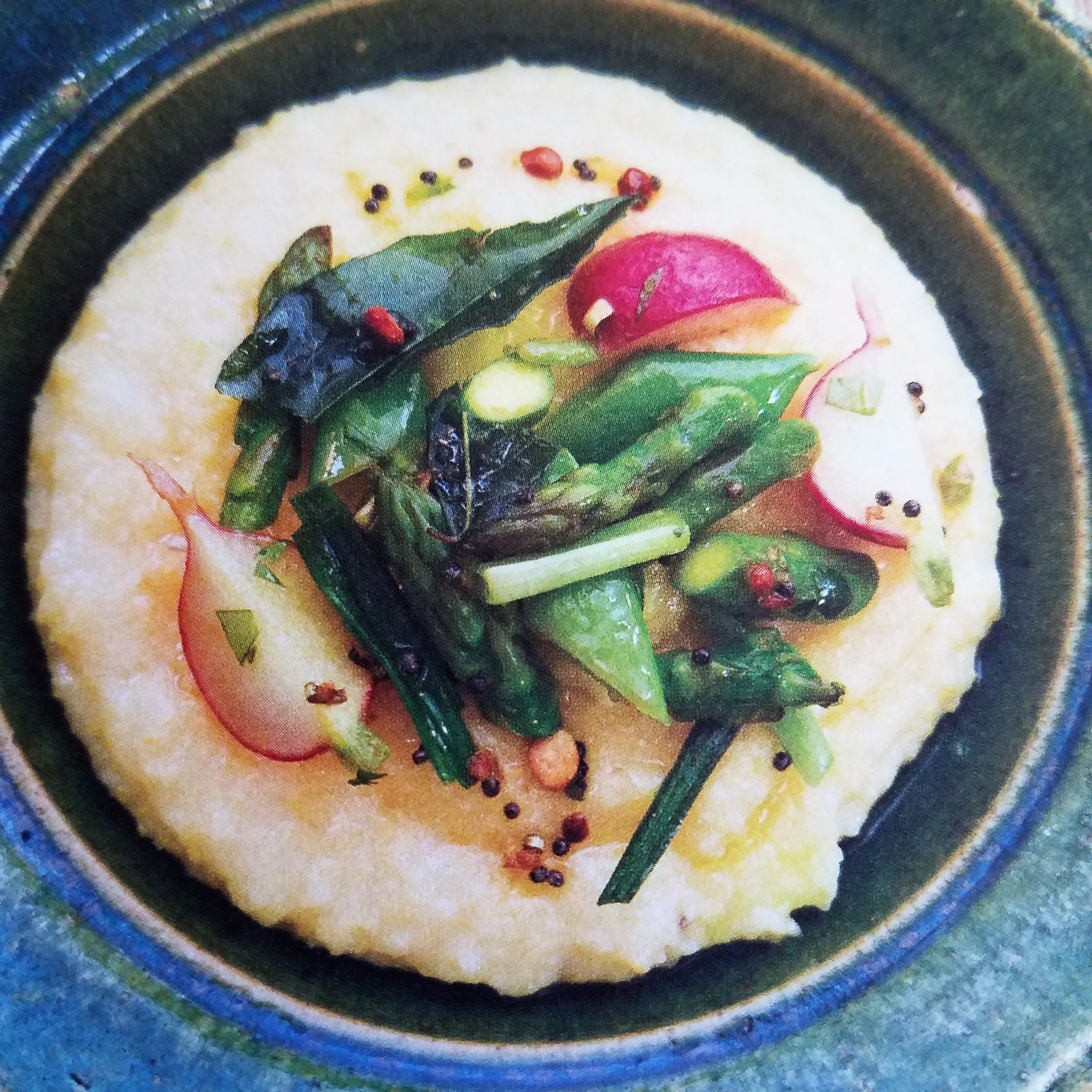 SPICED SPRING VEGETABLE AND COCONUT
POLENTA
SPICED SPRING VEGETABLE AND COCONUT
POLENTAThis is my gluten-free spin on uppittu or upma, a savory South Indian semolina breakfast or light snack. In Kannada, uppu means "salt" and hittu means "flour," so uppittu roughly translates to "salted flour" and is sometimes referred to as upma. In place of Indian semolina flour or farina, I use polenta and pair it with crunchy spring vegetables and traditional flavors of black mustard seeds, curry leaves, chile, coconut, and lemon.
Plain yogurt or butter
Thaw frozen coconut or place dried coconut in a little hot water to plump it up.
Put the oil in a wok over medium heat. When the oil is hot and shimmering, add one black mustard seed. When the seed sizzles and pops, add the rest of the mustard seeds. Keep a lid handy to cover the pan while the mustard seeds are popping. When the popping starts to subside (a few seconds), immediately add the chana dal and urad dal. Stir to coat with oil and turn the heat to medium-low.
Continue to stir the dals so they evenly roast, until they turn a reddish golden brown and smell nutty, less than a minute. Rub the curry leaves between your fingers a little to release their natural oils, and drop them, the ginger, and green chile into the oil. Cover immediately, as moisture from the curry leaves will cause the oil to spatter. Then stir to evenly coat everything with oil and continue to fry until the ginger and chile are less raw, 10 to 15 seconds.
Add the scallions and turmeric powder. Stir-fry for 1 minute on medium heat. Mix in the asparagus, snap peas, and radishes with a sprinkling of salt. Stir-fry the vegetables over high heat until tender but still crisp and just cooked through, about 3 minutes. During cooking, if the pan is looking dry, add a little water to it. Turn off the heat. Mix in the lemon juice and chopped cilantro. Taste for salt and lemon juice and adjust as needed.
Serve the polenta hot, topped with the vegetables, a dollop of plain yogurt, and a spoonful of hot pickle.
29 comments
RSW
dgp212
annmartina
susan g
earthnfire
Nancith
thecharlah
anastasiiap
Uhmandanicole
lgroom
sipa
AmyS
meggan
tarae1204
hippiechick1955
TrishaCP
monique.potel
Siegal
gjelizabeth
edyenicole
allthatsleftarethecrumbs
fiarose
PennyG
JenJoLa
sgump
AnnaZed
kelliwinter
Teruska
imaluckyducky