
Unless you're a real sausage fan, it's likely that at some time you've faced a recipe quandary - sausage types. How do you tell a bratwurst from a kielbasa? Here's a handy guide from Eatocracy (check out the article for further details, buying suggestions from the Test Kitchen, as well as possible substitutes and uses):
- Frankfurter, aka Hot Dog: Beef (sometimes combined with pork), which is cured, smoked, cooked, and seasoned with coriander, garlic, ground mustard, nutmeg, salt, sugar, and white pepper.
- Knackwurst, aka knockwurst: Plumper and more sophisticated than a hot dog.
- Pepperoni, aka the pizza sausage: Ground, dried pork (usually) combined with black and cayenne pepper, sugar, salt, and paprika and cured for several weeks.
- Bratwurst: Milder than hot dog, made from ground pork and veal gently seasoned with caraway, coriander, ginger, and nutmeg.
- Genoa salami: Cured pork sausage with visible pockets of fat.
- Banger: British slang for generic sausage.
- Kielbasa: Beef, pork, or turkey sausage made with garlic, marjoram, and smoke.
- Italian sausage: Coarsely ground fresh pork flavored with garlic and fennel seed and, for the hot variety, red pepper flakes.
- Spanish Chorizo (not Mexican chorizo): Cured, fully cooked. Made from chopped pork and pork fat and seasoned with smoked paprika, garlic, and herbs.
- Mexican Chorizo: Raw, sold in links or bulk packs. Includes paprika, garlic, and especially chili powder, which provides a spicy flavor.
- Andouille: Originally from Louisiana, made from ground pork, salt, garlic, and lots of black pepper, smoked over pecan wood and sugarcane.
- Linguiça: A peppery, smoked sausage made with an herbal blend of paprika, garlic, pepper, cumin, and, sometimes, allspice or cinnamon, which is then combined with pork butt and brined in vinegar and salt before smoking.
And now that's clear, here are a few popular recipes from the EYB Library to try them out:
- Spanish chicken with chorizo and potatoes from Nigella Lawson
- Red beans and rice with ham hocks and andouille smoked sausage from Paul Prudhomme
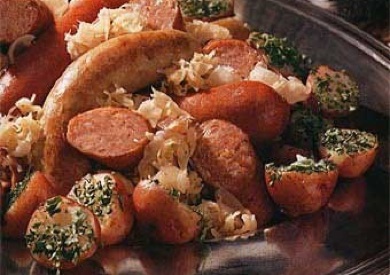
- Choucroute garnie from Epicurious
- Slow cooker lentil soup with turkey bratwurst, leeks, and sherry vinegar from Kalyn's Kitchen
- Franks and sauerkraut paprikash from Elise Bauer
Photo of Choucroute courtesy of Epicurious
2 comments
boardingace
Kalyn